China’s Visa-Free Transit: A Dream Come True – Until It Wasn’t
Our trip to China was meant to be easy, exciting, and seamless. We were returning for our second visit using China’s Visa-Free Transit Program, a fantastic option for travellers passing through the country. It’s especially appealing compared to China’s traditional visa process, which is time-consuming, expensive, and packed with paperwork. You’re required to submit full hotel bookings, train itineraries, and onward travel confirmations before you even know whether you’ll be approved. Originally, we planned to spend 30 days in China, but managing that much documentation in advance felt overwhelming, especially knowing we’d have to wait in line in Hong Kong and hope for approval. China’s visa-free transit program seemed so much more simple for our travel plans.
So we chose the visa-free route, and it made planning much more manageable. Breaking the trip into 10-day segments felt way more doable than committing to a full month in advance. We designed a route through neighbouring countries that allowed us to enter China more than once under the transit policy, a perfect workaround for full-time travellers who prefer flexibility.
The program allows a stay of up to 10 days visa-free, as long as you enter and exit through approved ports and remain within one of the 24 eligible regions. You must also have a ticket for onward travel within 240 hours(10 days) to a new destination that differs from the country you arrived from. The purpose is a stopover onwards to a new destination. Not a visit only to China. We did everything by the book: flights booked, train tickets confirmed, hotels arranged, itineraries mapped out. We arrived in Beijing feeling calm, confident, and ready to enjoy our trip.
But even with near-perfect preparation, we quickly learned that all it takes is one overlooked detail to throw everything off course.
Arriving in Beijing Visa-Free: A Perfect Short-Trip Itinerary
The details of the plan were simple, or so we thought. We approached the experience with confidence, having done our homework, we understood the rules. The flight from Jeju, South Korea was short, which meant we arrived in Beijing rested, alert, and ready for what we assumed would be a seamless entry.
Our itinerary was solid: explore Beijing’s major landmarks, the Great Wall, Forbidden City, Tiananmen Square, and Temple of Heaven, then take the high-speed train to Xi’an to see the Terracotta Warriors, ride bikes along the ancient city wall, and visit the Wild Goose Pagoda. From there, we’d fly on to Tashkent, Uzbekistan, with a layover in Urumqi. On paper, everything appeared to follow the visa-free rules.
But all that confidence dissolved the moment we were stopped at immigration.
Held at Immigration in China
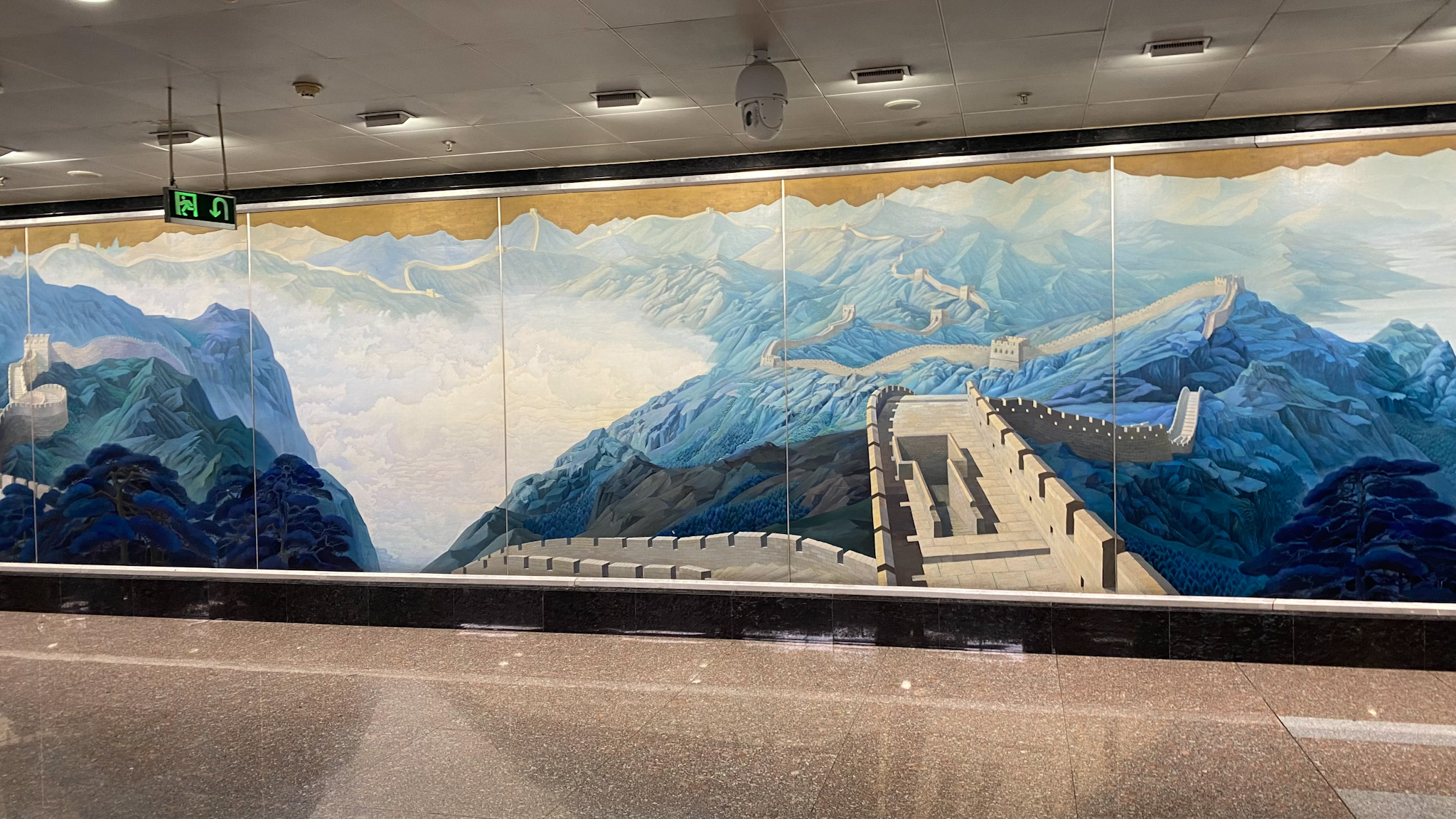
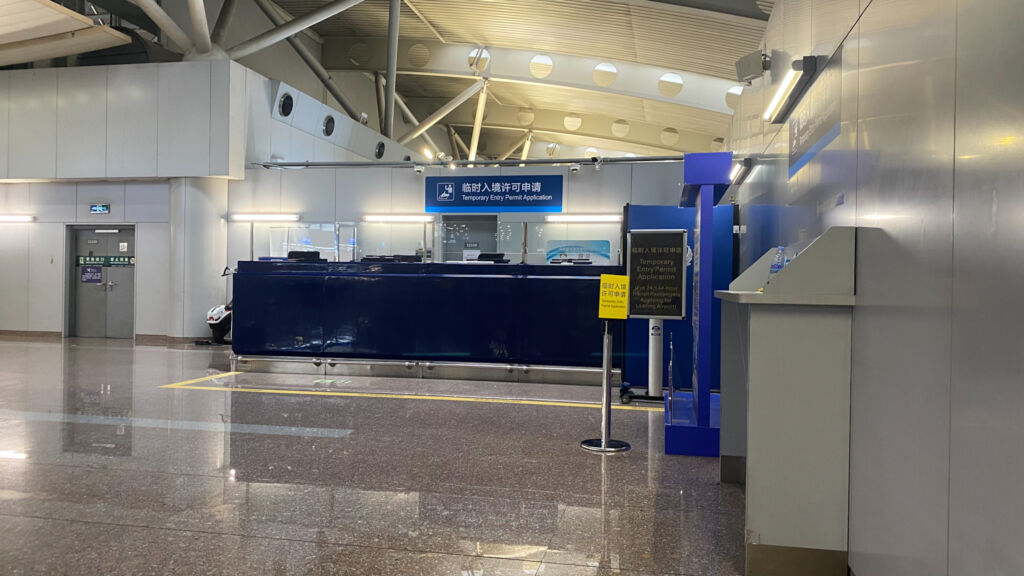
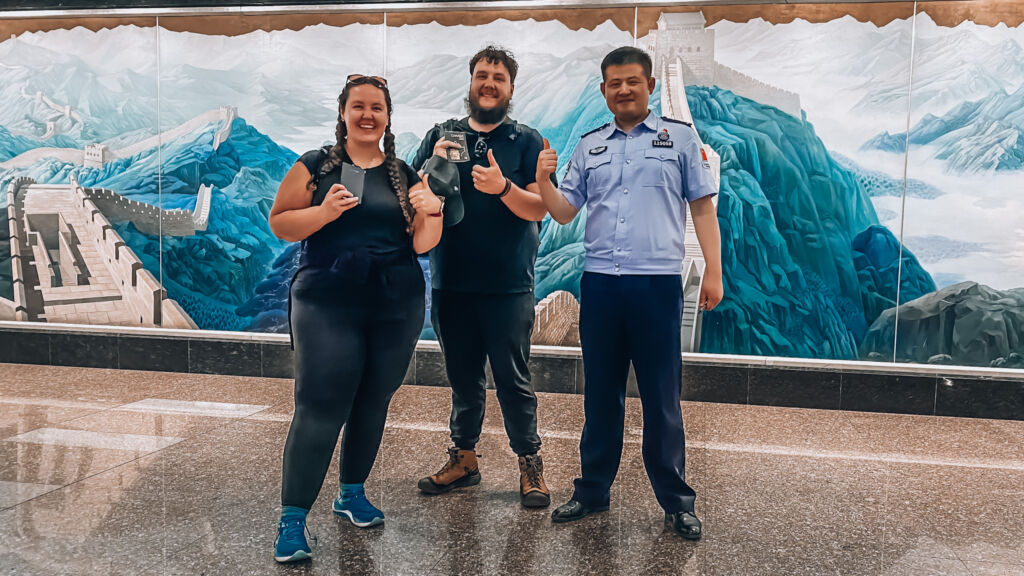
Why couldn’t we pass? What was holding up entry? Why were we being detained? At immigration in Beijing, our nerves began to spike. The immigration area was designed for efficiency. It was clean, with a pleasant mural behind the desks, but limited seating. This was not meant to be a comfortable lounging area. When we were sent away, we were first told that a representative from Korean Air would meet us. They would look into our flight and get the answers requested by the immigration officers. We were fortunate to snag four seats, which became our home for the six long hours that followed. We kept reminding ourselves: this could have been worse. Some countries would have arrested us or made the process far more stressful. Here, the officers were professional, calm, and kind.
The China Visa Free Transit Problem
What went wrong? Everything from hotels to train tickets was in order. The problem was our exit flight itinerary.
Our departure from China was booked from Xi’an to Tashkent, Uzbekistan, with a layover in Urumqi. We knew about the layover and believed it wouldn’t be a problem. Our research suggested Xi’an would be our official exit point. We’d read that as long as your flight was one purchase, showing that it was a layover and not an additional stop, the exit stamp would happen at your original departure city. For us, Xi’an. We had also taken comfort in the fact that Xi’an is an approved port under the visa-free program. All good, right? Nope.
What we didn’t realize was that, because the Urumqi leg involved a plane change and a new flight number, immigration would treat Urumqi, not Xi’an, as our official point of departure from China. Since Urumqi isn’t one of the 60 approved ports or within the 24 eligible regions for the visa-free program, our carefully planned route no longer qualified for the program.
The immigration officer flagged this. He tried patiently to resolve the issue by calling Korean Air, the airline that had flown us in. He wanted to confirm whether we could be stamped out of China in Xi’an. This would have helped. If so, we’d be fine. All of our research had pointed to this being acceptable. But it turned into chaos. So, heads up, it is not permitted. Don’t even try.
Stranded at Immigration: How Airlines Left Us Hanging During Our China Visa-Free Transit Nightmare
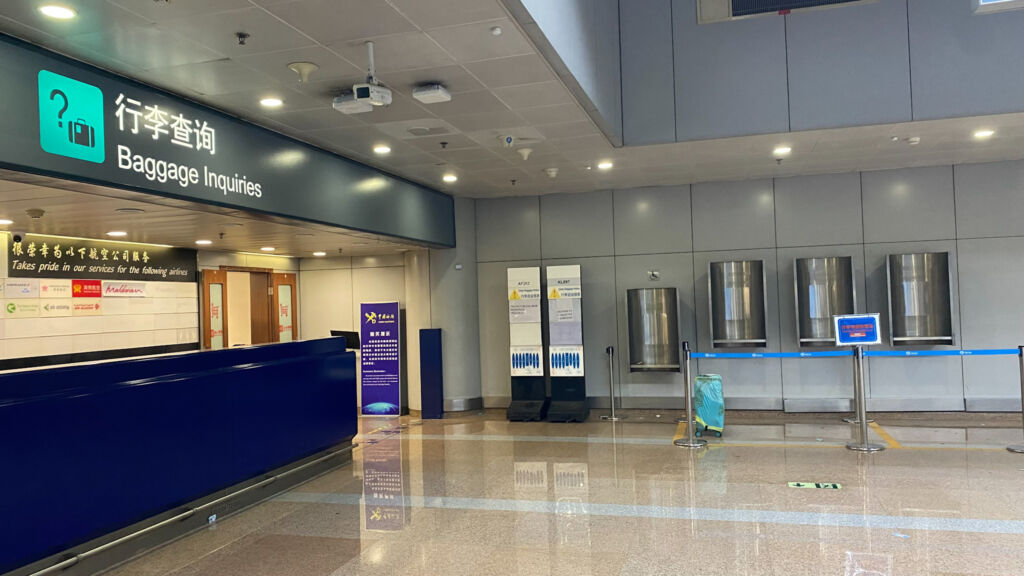
Korean Air, the airline that flew us into Beijing, struggled from the start to contact China Southern, the carrier operating our onward flight to Tashkent. They spent over an hour on hold before finally reaching a representative. By then, the Korean Air staff were visibly frustrated. After a short, tense conversation, they hung up and told us bluntly, “Just buy another ticket.”
That was the first of many moments where we realized we were not getting the full story. After two hours of back-and-forth, Korean Air simply told immigration, “Call us if you decide on anything.” At that point, all we knew was that Korean Air wanted us to pay for a new flight, but we still didn’t know where our official immigration exit point was supposed to be.
Only later did it become clear: Korean Air had been responsible for ensuring we met the visa-free program’s requirements before allowing us to board in Jeju. Because they hadn’t done so, they were technically on the hook for flying us back to a country willing to accept us. That’s an expensive problem for an airline and one they’d rather pass on to the passenger. If they could push us into buying new tickets and passing through immigration, we would no longer be their responsibility.
This pressure to make a major purchase without all the facts was deeply unsettling. The language barrier didn’t help. We used translation apps, but even then, it often felt like the staff didn’t understand, or pretended not to.
Suddenly, we were stuck with no clear path forward and more questions than answers.
Taking Control Amid Chaos: Solving Our China Visa-Free Transit Crisis
Without real help from the airlines, we took matters into our own hands. We messaged China Southern on Facebook, tried WhatsApp, and called home early in the morning (6 AM Toronto time) to wake one of our mothers. We needed someone to call China Southern directly because customer service on Facebook was too slow. Spoiler alert, they never answered.
Johnathan’s Mother answered and tried many of the posted numbers to get a hold of China Southern Air. This was not a quick process either. More than 2 hours later, we were able to speak to the China Southern representative. The phone call brought clarity. The airlines don’t decide where immigration stamping happens; the Chinese government does. So with this flight, the immigration exit stamp would be Urumqi. Another stamping location was not possible. Seeing as this is not an eligible port, our itinerary violated the visa-free transit rules. That made the entire route invalid.
Our options were limited but clear: refund or change the ticket. The cost for a refund was a bit more than to transfer our tickets; however, the alternative China Southern Air flights didn’t fit our flight path.
We chose to cancel and rebook a direct flight from Xi’an to Uzbekistan through Trip.com with an alternative airline. Booking the new ticket took longer than expected. Trip.com said confirmation might take up to four hours, but it came through in about 30 minutes.
After finally reaching China Southern Airlines, we spent an exhausting hour verifying our names, confirming our identities, and deciding whether to accept a refund or transfer our tickets. The process was slow and frustrating, with little clear information. Then, it took another 30 minutes to book new tickets, all while feeling increasingly overwhelmed by the uncertainty.
Stuck in Limbo: The Emotional Roller Coaster of China’s Visa-Free Transit Delay
Those six hours were a mix of stress, hope, and frustration. Early on, we felt optimistic — sure the immigration officer would solve it and stamp us out. But as time passed, our hope faded. We questioned if China Southern would rebook us or if we’d have to buy a new ticket at our own expense. The harsh reality hit: China Southern Air was not required to help us because Korean Air hadn’t checked the itinerary properly before we departed from Jeju.
Despite the anxiety, we were lucky. Our flight had arrived early in the day, and we weren’t exhausted from a long-haul. This helped us remain calm and stay patient longer. Arriving late would have been a nightmare; customer support might have been closed, and immigration desks might have shut down, leaving us stuck overnight. This is one of the biggest travel lessons we took away. When dealing with any type of entry requirements, arrive early and rested at a new destination.
Kindness Amid China’s Immigration Bureaucracy: Our Visa-Free Transit Experience
By the time we got everything sorted, most immigration officers had finished their shifts. A new officer came on duty and apologized profusely for the trouble, thanking us for our patience. He was understanding and kind in a way that made a huge difference.
We asked for a picture with him, and his coworker happily took it. It was a moment of genuine connection amid a difficult situation.
What You Need to Know About China’s Visa-Free Transit Program
–Direct flights only. Any layover in a city outside the approved ports disqualifies your itinerary. Even if you don’t leave the airport during a layover, the program counts the flight segments strictly.
–Airlines often don’t understand or communicate the rules. Don’t assume your airline will check or inform you about eligibility.
-Immigration officers are professional and kind but bound by rules. They can’t help if your route violates the program’s strict requirements.
-China is safe and welcoming. Despite the bureaucracy, the officials treated us respectfully and humanely.
-Plan carefully. Book all hotels and internal transportation yourself. Your name needs to be on every booking, as immigration requires proof of your entire stay. Trains are included in this. We saw other travellers get stopped because bookings were made in her mother’s name.
-Arrive early in the day. Customer service lines and immigration desks close at night, which can trap you in long, unavoidable waits. Plan for the worst and hope for the best.
Final Thoughts: Lessons from the Journey
This experience was stressful but deeply affirming. It reminded us how kindness can exist even in bureaucratic chaos and how careful planning is crucial for international travel.
Don’t make the same mistake we did. Double-check every flight segment and avoid layovers outside the approved ports. Know the program’s strict rules inside and out. A layover that seems minor can ruin your entire visa-free plan.
Despite the hiccup, we still highly recommend visiting China. The culture, the cities, the people, and the experiences are unmatched. Every city felt unique: Beijing and Xi’an charmed us with history and warmth, while Shanghai offered a different vibe, one that wasn’t our favourite but still memorable.
Travelling to China under the visa-free transit program is a dream worth chasing. Just make sure you know exactly what the rules are, plan direct flights, and bring patience.
Checklist for Travellers Using China’s Visa-Free Transit Program:
-Book direct flights only between approved ports (no layovers in unapproved cities).
-Verify your route includes only one of the 60 approved ports and stays within the 24 eligible regions. Here is where to find up-to-date information.
-Have all hotel bookings and train tickets under your name and ready to show.
-Avoid relying on airlines to inform you about visa-free eligibility; do your research. This is new to them as well.
-Arrive early in the day to allow time for potential issues and keep communication lines open.
-Trains will use your passport information, so do not get a new one in the midst of planning travel; your tickets will be invalid.
-Don’t let anyone else book under your name. Hotels need to register your stay officially.
-Keep family or friends informed and able to help with calls if needed.
If you’re planning to visit China using the visa-free transit program, this story is a gentle warning and a hopeful reminder that thorough preparation and calm persistence go a long way.
TLDR
Our China Visa-Free Transit plan seemed perfect with flights, hotels, and train tickets all booked. We arrived in Beijing confident and ready to follow our 10-day itinerary to Beijing, Xi’an, and onward to Uzbekistan. A layover in Urumqi, which is not an approved visa-free port, invalidated our route and left us stranded at immigration for six hours. Airlines were unhelpful, and we had to re-book a direct flight to comply with the rules.
Key lessons: always book direct flights between approved ports, keep all bookings under your name, verify visa-free eligibility yourself, and arrive early in the day. Despite the stress, immigration officers were professional and kind. China is still worth visiting but the visa-free program requires strict adherence to rules.
Checklist: direct flights, approved ports and regions, all bookings under your name, do not rely on airlines, communicate with family or friends, arrive early, and double-check train and hotel bookings.