
We were ready for the 12 a.m. wake-up, the freezing desert air, and the 3.5-hour drive through the dark. That’s what you sign up for when you chase an ancient sunrise, no complaints there.
But we weren’t ready for a 4,000-person stampede, surprise ticket prices, and total chaos at one of Egypt’s most famous temples.
We came for the Abu Simbel Sun Festival. A twice-a-year cosmic event where sunlight hits the gods just right.
Instead, we got elbows, shouting, and a quick look at one very well-lit shoulder.
The festival immediately caught our attention; it’s all about the alignment of the sun. Sure, this kind of thing happens at temples around the world, but seeing it unfold in person, inside Abu Simbel itself, felt special. The thought of witnessing an ancient spectacle that’s been happening for over 3,000 years was thrilling. How many people can say they’ve done that? We were all in. But what exactly is the Abu Simbel Sun Festival?
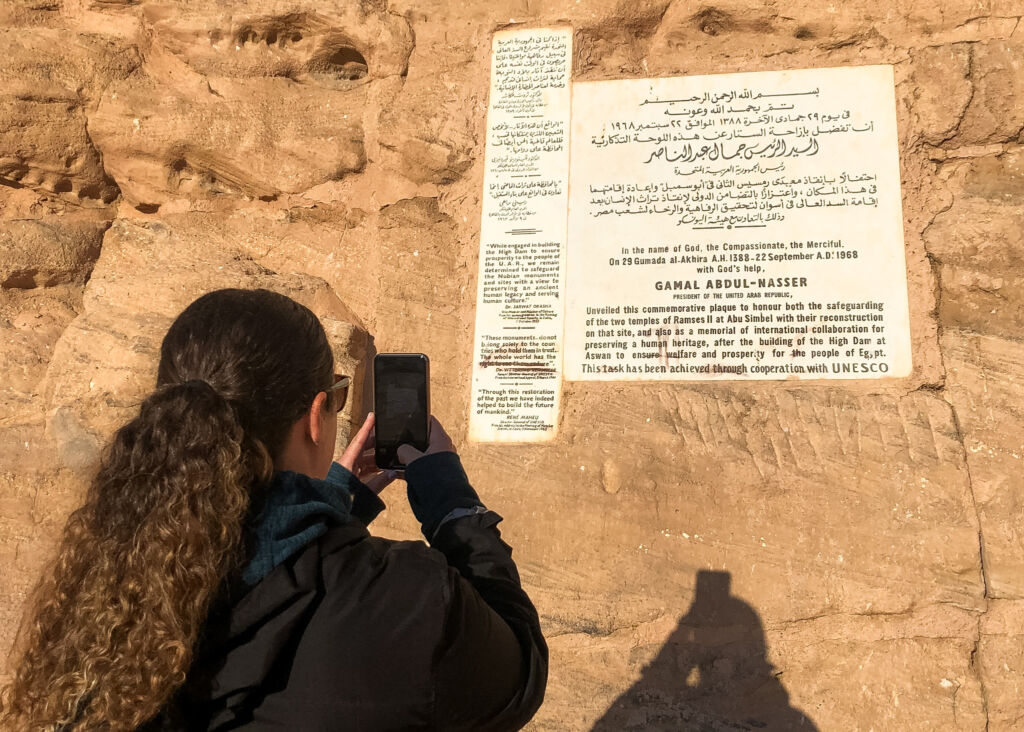
What is the Abu Simbel Sun Festival?
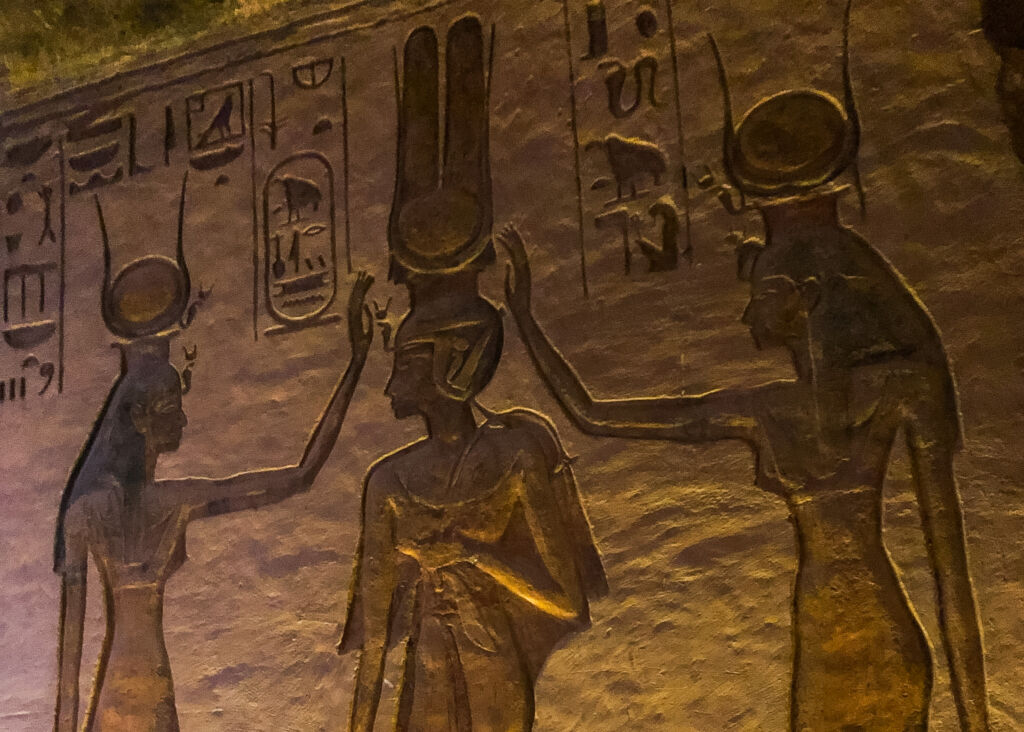
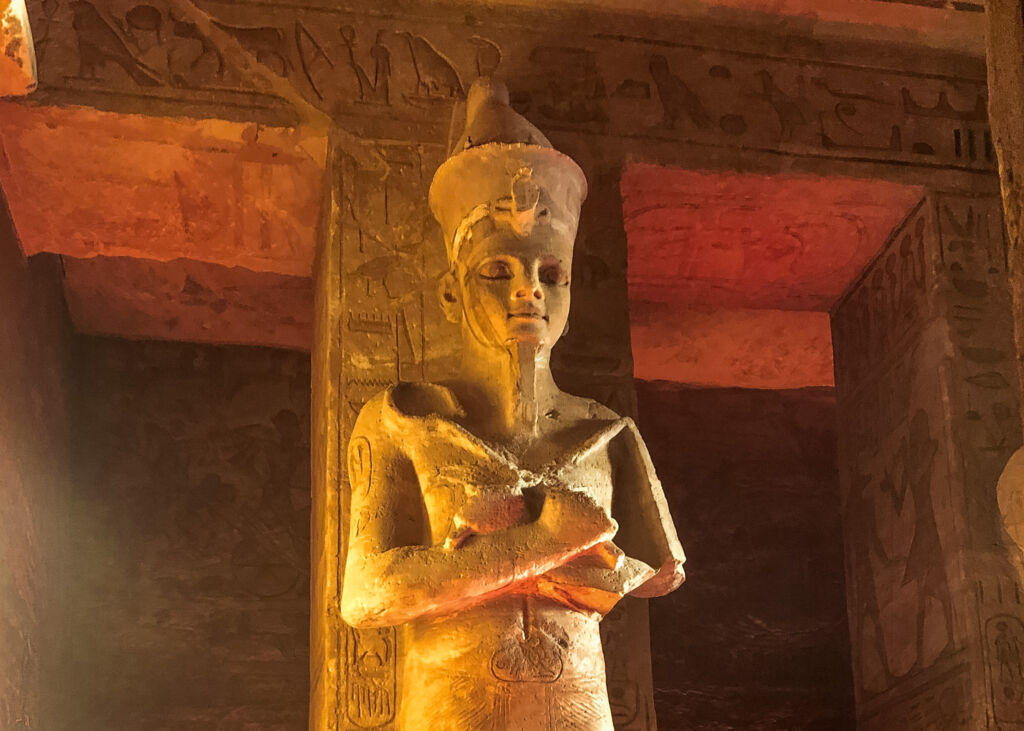
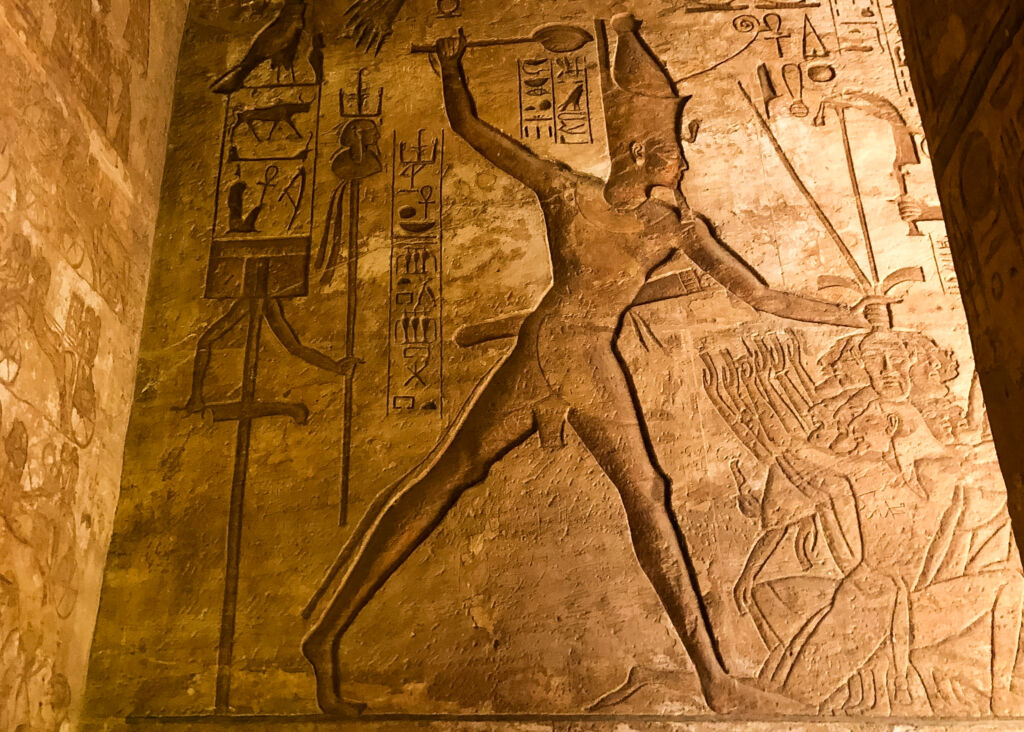
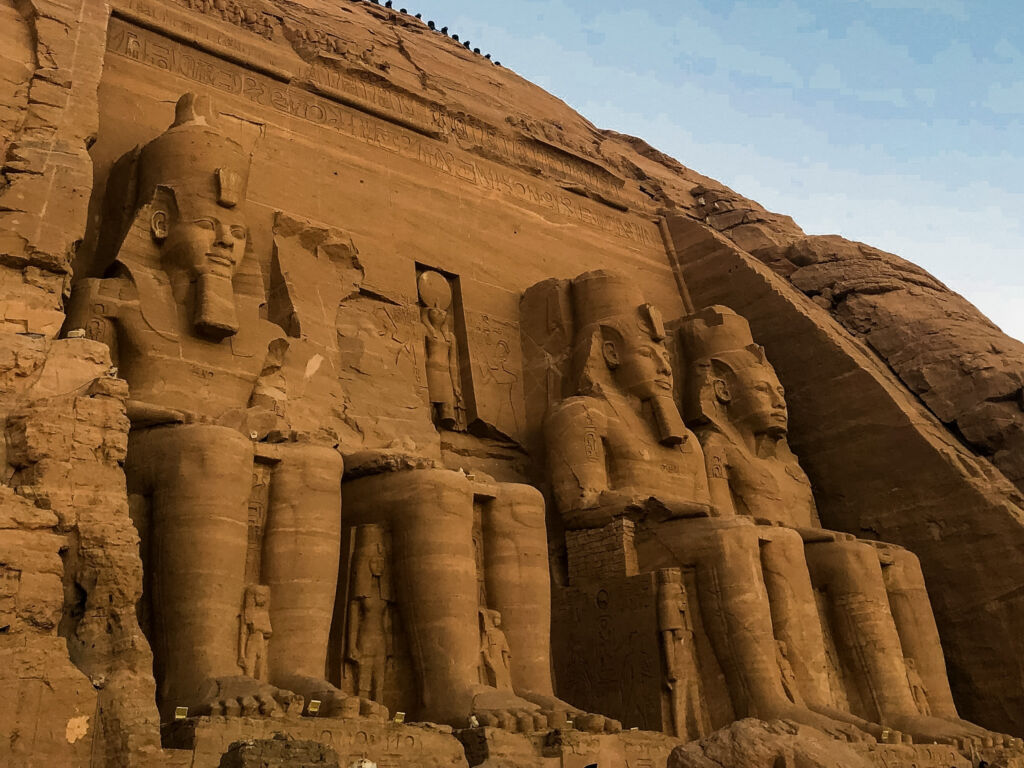
The Abu Simbel Sun Festival is a biannual event celebrating Pharaoh Ramses II. A man who, as you’ll quickly learn in Egypt, was very fond of himself. The festival marks both his ascension to the throne (February 22) and his birthday (October 22). On those two mornings, the sun rises at the perfect angle to shine through the temple’s entrance and illuminate the inner sanctuary. Lighting up the statues of Ra (the sun god), Ramses II himself, and Amun (the king of the gods), while Ptah, the god of darkness, fittingly remains in shadow.
This alignment has been happening for over 3,200 years, but here’s the twist: it used to happen one day earlier. To protect the temple from the rising waters of Lake Nasser after the construction of the Aswan High Dam, engineers relocated it in 1968. During the reconstruction, they shifted its orientation slightly. That’s why the illumination now happens on the 22nd instead of the 21st.
The move itself was an engineering miracle. Engineers cut the entire temple complex, including both Ramses II’s and Nefertari’s temples, into more than a thousand blocks before reassembling it 210 metres inland and 65 metres higher against an artificial cliff. UNESCO and the Egyptian government led the international campaign to save it, and thanks to that effort, we can still stand there today to see Ramses get his moment in the sun.
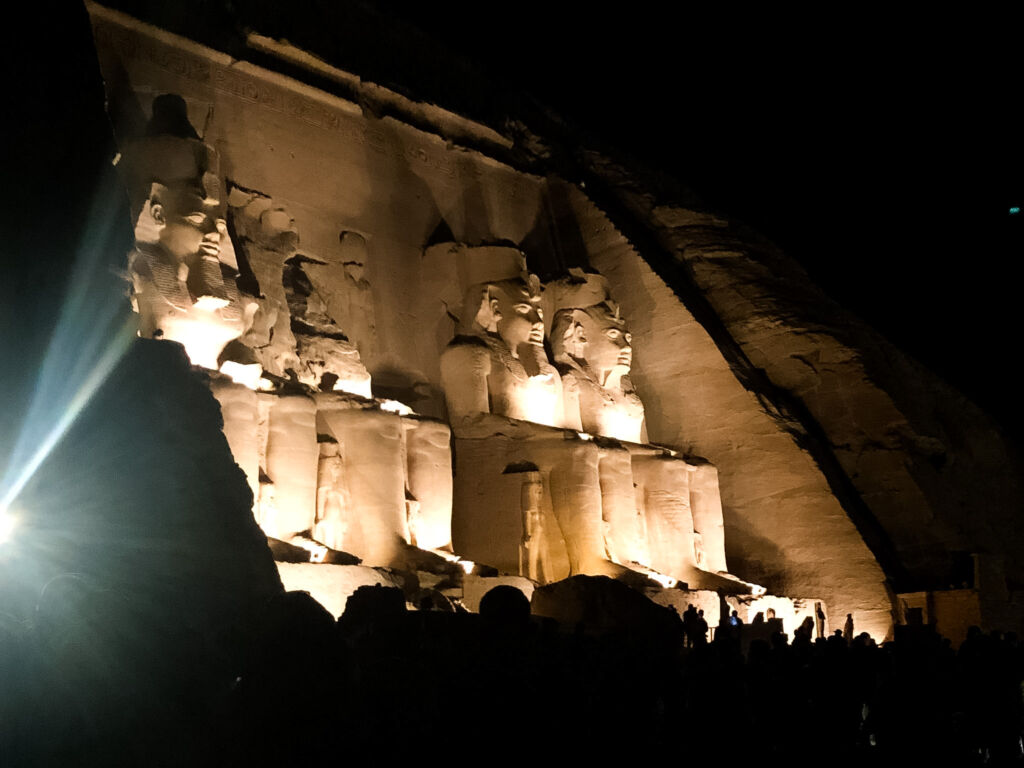
But Let’s Talk Tickets
If you think you can just show up in Aswan the night before and grab a tour to the Sun Festival, think again. The Abu Simbel Sun Festival is a hot-ticket event and last-minute attempts usually fail. Tickets are purchased at the gate for an additional charge to the tour. But organizing transportation is just as critical; options are limited.
If you think you can just show up in Aswan the night before and grab a tour to the Sun Festival, think again. The Abu Simbel Sun Festival is a hot-ticket event and last-minute attempts usually fail. Tickets are purchased at the gate for an additional charge to the tour. But organizing transportation is just as critical; options are limited.
You can spend a night in Abu Simbel town, but we heard there is not much to do once the temple visit is over. So we opted for the long drive both ways on the same day. Even then, we saw people trying to grab spots on the bus from Aswan just hours before the festival with no luck. This is not a wing-it event.
What did we expect from this festival?
What We Expected
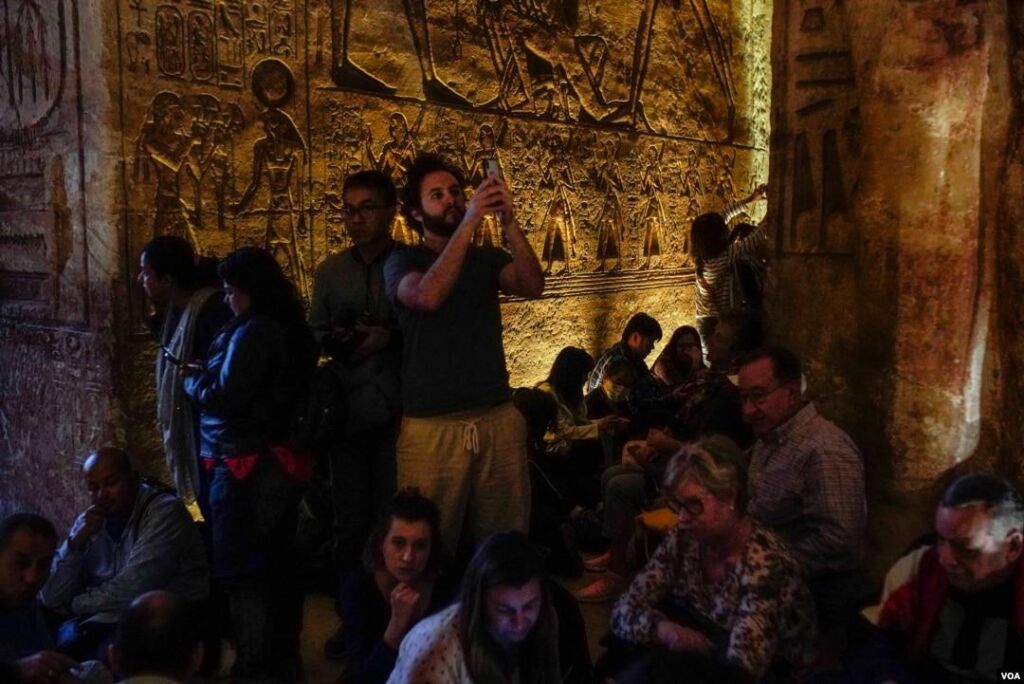
But with all this hoopla surrounding the event, what did we think we were getting? We imagined a serene, awe-inspiring experience. From seeing tour operator pictures, we were excited to see the temple was filled with local and international tourists awaiting the sun to illuminate the back chamber of the temple. We expected long lines and a lot of people. We understood this was why we left so early. To make sure no delays got in our way.
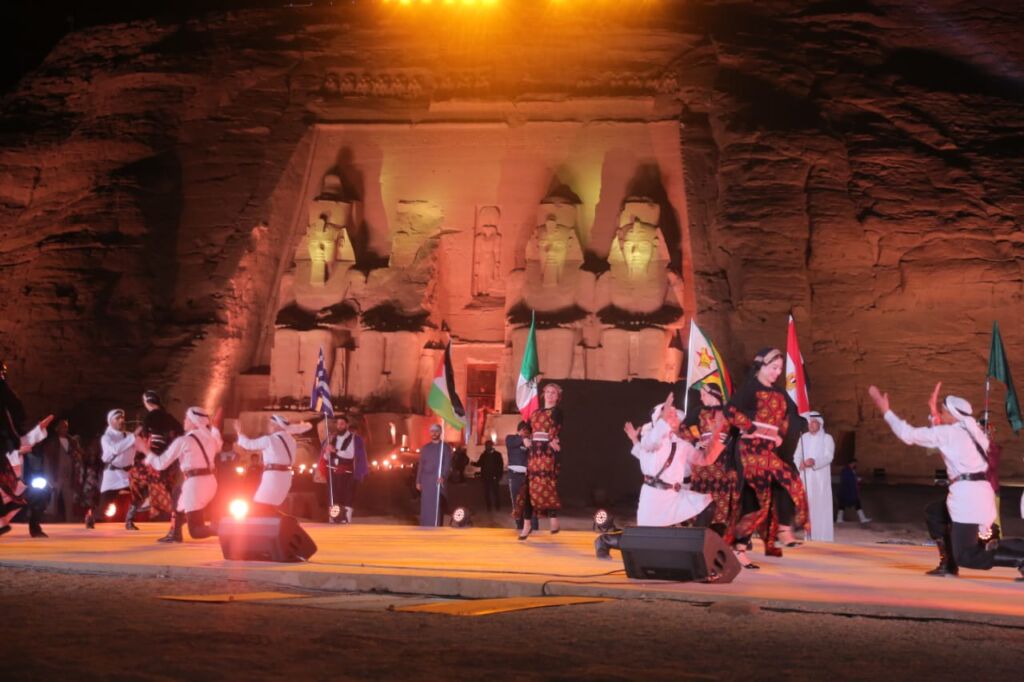
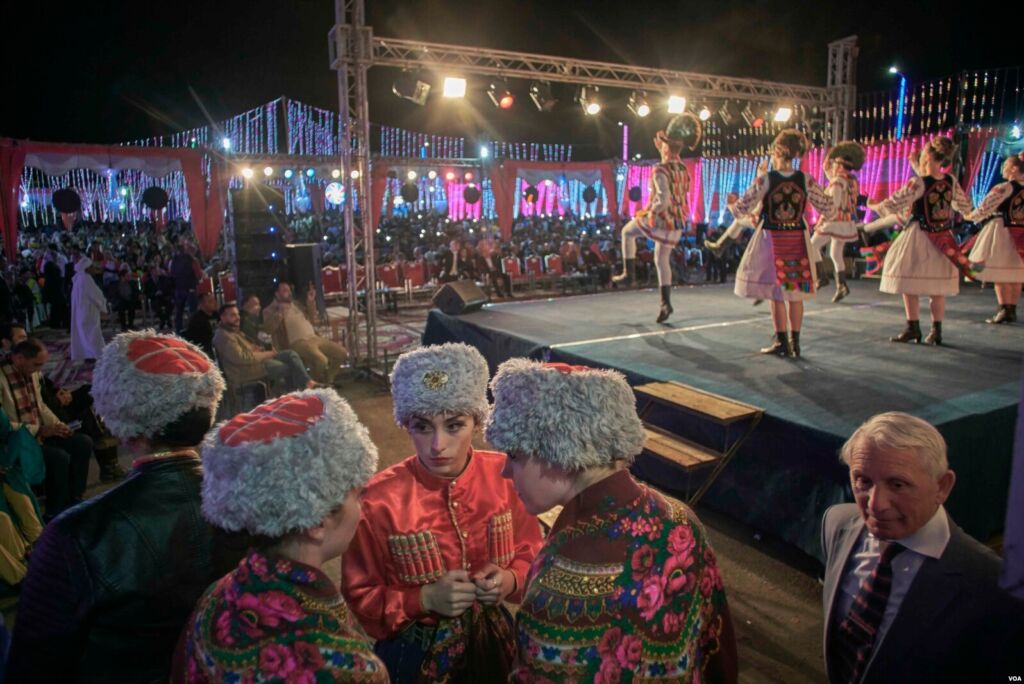
We figured it would take a while to get everyone organized to sit on the temple floor. Probably an hour before the main event, which only lasts 25 minutes. Then we saw mention of cultural musical and dance performances. So we were under the understanding that once the main event of the illuminated statues in the back chamber was completed, we would all leave the temple and participate in the festivities in front of the temple. We expected a stage for the performers or a section with bleachers set up to handle the large crowds, but whatever it was, it would allow everyone to see the performances.
With everything planned, we figured a premium price was okay to pay because we would be at the temple longer than a normal tour, plus we would get an experience that regular tours don’t. To be inside the temple for a special sunrise that happens 2 times a year and we would get special performances for the Sun Festival.
If you’re Egyptian, or have attended the Abu Simbel Sun Festival yourself, you are probably laughing at this point. I had a very organized, romanticized, and optimistic view of how this thing was to go down. Let’s just say, what really happened was as far away from this expectation as you could get. If my expectation was a plan, it was set on fire, never to be seen again.
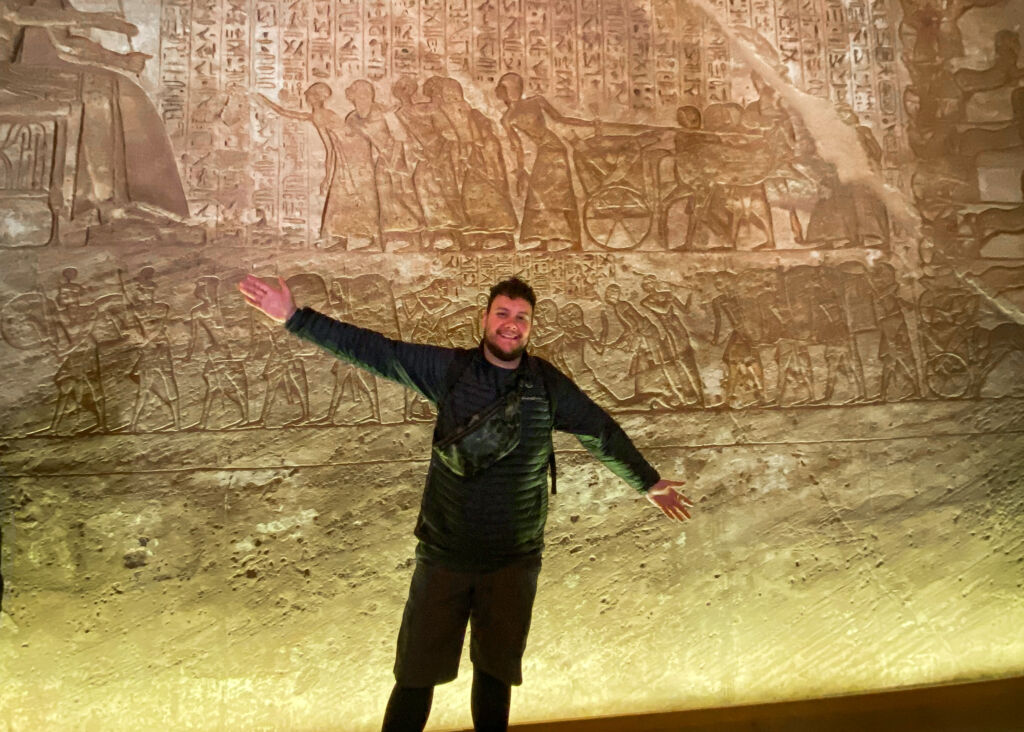
What Actually Happened
The Ride
Our alarm went off at 12 midnight, and the day ahead promised to be long. Staying on Aswan’s island meant a short boat ride to the mainland, something we hadn’t really accounted for. Fortunately, someone was still manning the ferry boat at this hour, getting us to our pick-up point.
The van arrived about 30 minutes late, which in Egypt basically counts as “on time.” But there was a rush to join the convoy before the police shut the road down, and we missed our opportunity. However, once on the road, the 3.5-hour drive to Abu Simbel was smooth. For regular visits, this road no longer requires a police escort, but for the Sun Festival, security measures are still stepped up. A police-escorted convoy ensures everyone reaches the temple safely. Just a reminder of the political turmoil in this part of the world. Where you can’t help but feel uneasy. Even when you know it’s an additional step to protect you. I was on edge all the whole morning because when something happens, it usually is at a large event. My eyes were peeled.
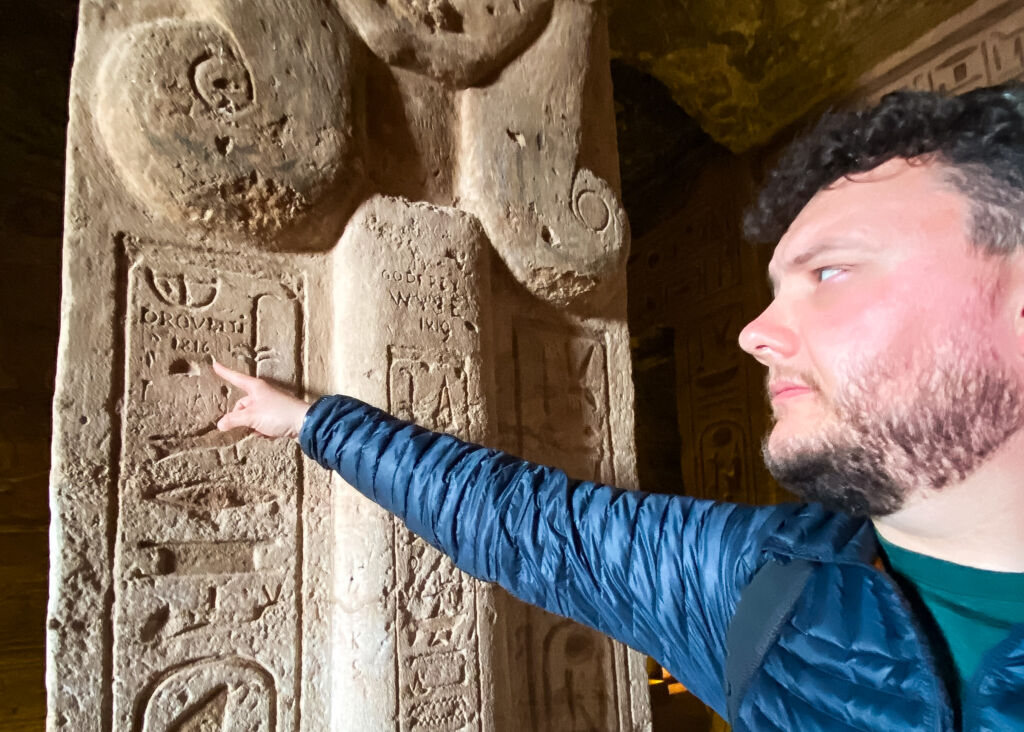
We Have Arrived
After three and a half hours of desert darkness, we finally arrived at Abu Simbel. Well… the parking lot of Abu Simbel. Not exactly the moment of ancient wonder we’d imagined, but after that ride, asphalt counted as a victory. That driver made up for lost time.
The crowds were already forming; they were big, but still in the “manageable” category. Spirits were high. People were excited. None of us yet knew what was coming.
Since the entrance ticket wasn’t included, our group dutifully lined up at the gate with our guide. No problem. Easy. Quick.
Except then came the surprise price surge; ticket prices had doubled. And judging by the look on the guides’ faces, they learned this information the same moment we did.
The panic was immediate. The booth only accepted cash, so suddenly everyone was digging through bags, borrowing from guides, whisper-arguing about the “new price,” and calculating whether the sun was really worth this kind of financial commitment. The mood shifted fast, like someone had flipped the “chaos” switch.
Our group paid the increase, mostly because the alternative was sitting outside in the dark for three hours and then driving all the way back to Aswan, having seen nothing except the parking lot. But other groups argued. Not exactly the magical sunrise experience we came for. Off to a great start.
Temple Time… Kinda
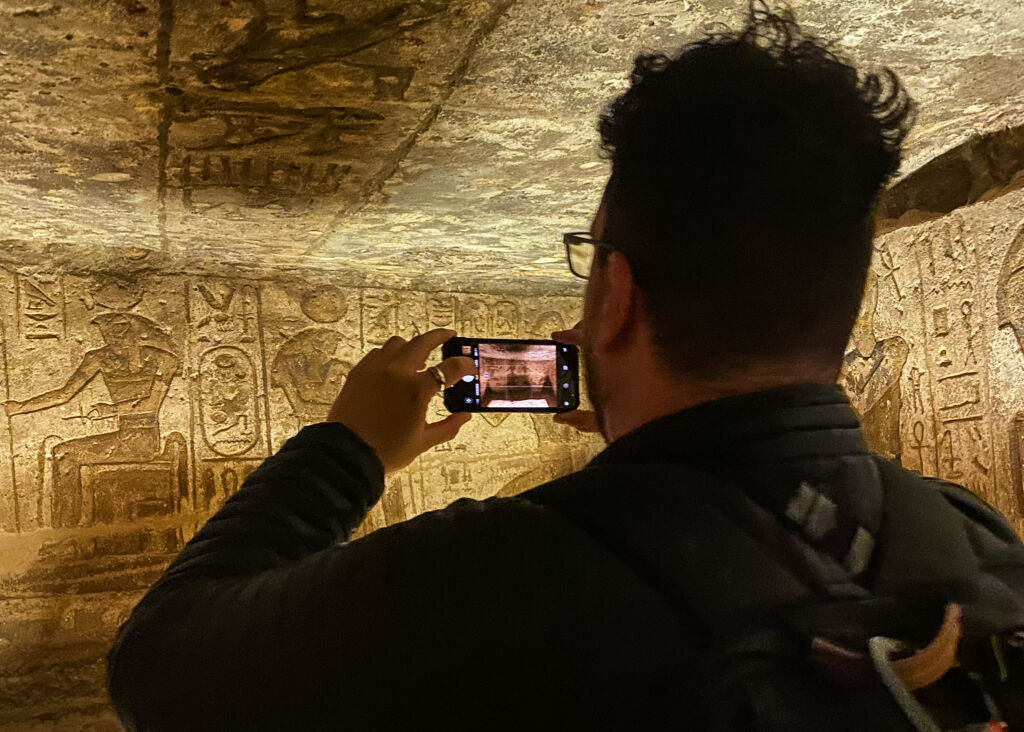
Once we made it through the gate, our guide gathered everyone for a quick history lesson, or what was supposed to be one. He had visual aids, which was adorable, but since it was still pitch black, he may as well have been holding up blank paper. We nodded politely anyway.
Then came the important part. He explained that the Sun Festival procedure had changed. No more gathering inside the temple, sitting on the floor, and watching the sun slowly illuminate the statues. Instead, thousands of us would be funneled through in a moving line, given a few seconds to glance toward the chamber, and then ushered out to make room for the next wave.
This was the moment our expectations quietly packed their bags and walked off into the desert. That was the main point of the visit.
And This Is Where Things Started Falling Apart
Wait… what?
So the massive line forming during his talk?
That was the line to see the illuminated chamber.
Meaning we just spent 10–20 minutes politely listening while hundreds of people, who clearly knew better, filed right past us and gained priority. Our group was… let’s say, “visibly un-amused.” Why weren’t we getting this explanation in the line?
With the sun set to illuminate the chamber for only about 25 minutes, the math wasn’t mathing. Would we even get to see it with this many people? Later we learned there were over 4,000 people in attendance. Four thousand people + twenty-five minutes = Chaos
We got in line. And stayed there. For nearly two hours. Except “line” might be too generous. There was no crowd control, and groups kept casually merging 100 people ahead of us like it was a theme park on Bring Your Entire Family Day. Our group slowly divided into two factions:
The Loyalists: stayed in place, fueled by hope and stubbornness.
The Opportunists: pushed ahead and blended into other groups like undercover agents.
Meanwhile, the last pre-sunrise chill set in. February in the desert is freezing, so everyone resorted to hopping in place or snuggling like penguins to survive.
And still, we had no idea when the actual sun-moment would happen or whether other festival events existed at all. But then, faintly, we saw light beginning to glow across Lake Nasser.
Was it finally time?
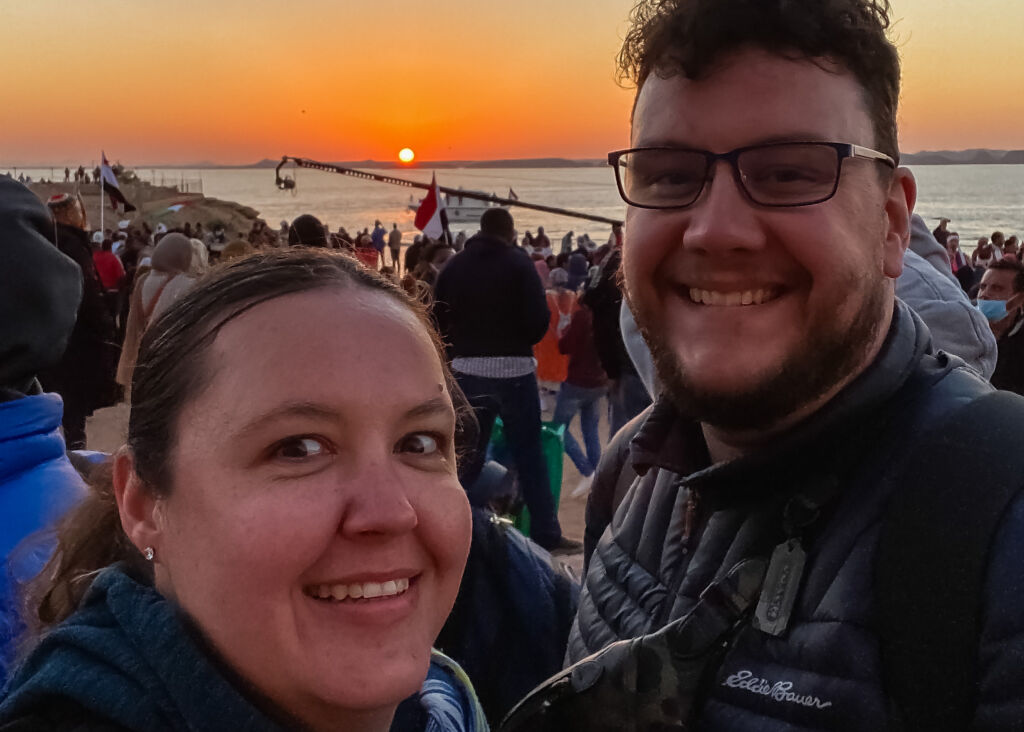
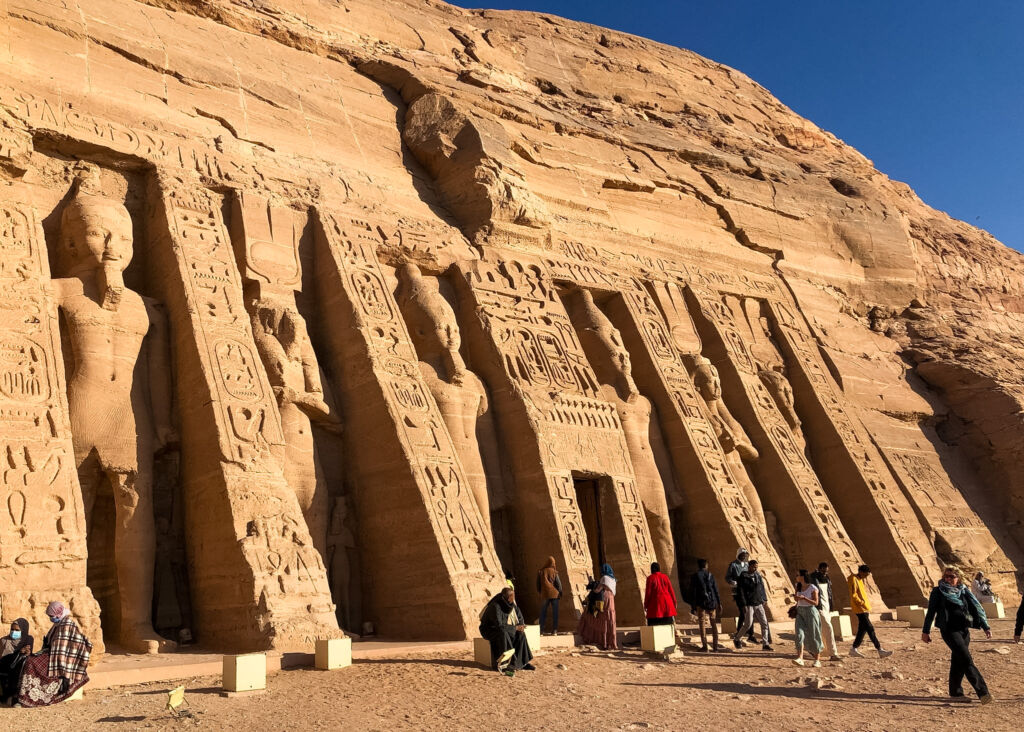
Sunrise at Abu Simbel: What Actually Happened
Well… sort of.
The sky started to brighten long before the sun actually bothered to show up, but the crowd didn’t care; the energy shifted fast. People were buzzing, shuffling, complaining, and collectively losing feeling in their toes.
Then we noticed performers wandering through the crowd in full costume. Musicians tuning instruments. Dancers stretching like they were about to go on stage. It finally felt like something big was about to happen.
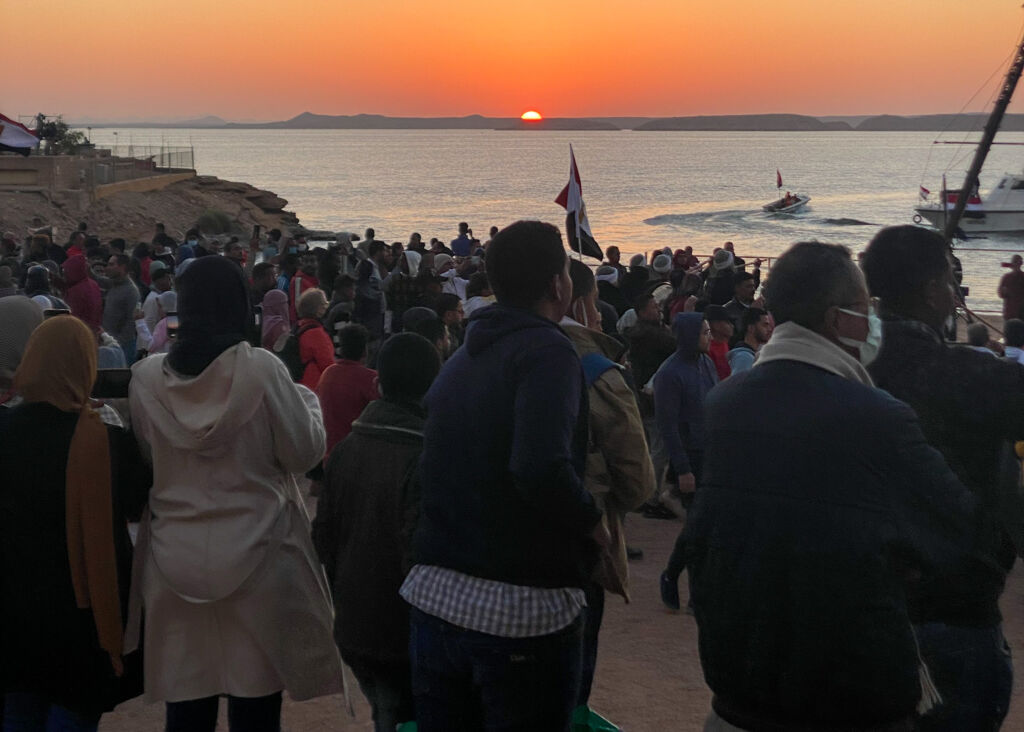
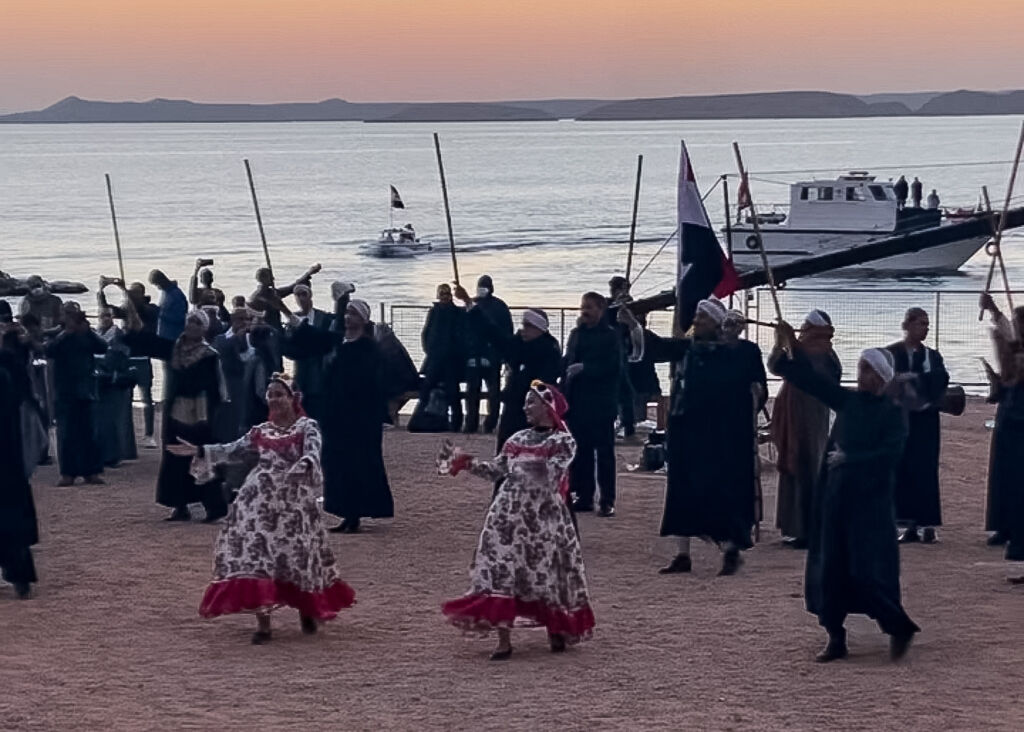
The Unexpected Performance – Earlier than Expected
And then, without warning, the “show” began.
Except it wasn’t a show so much as… random performers popping up between tourists and playing a few notes before disappearing like festival mirages.
There was no stage, no designated viewing area, nothing elevated, just dancers and musicians swallowed by a crowd of thousands. It felt less like a cultural showcase and more like someone had accidentally scheduled a flash mob at the wrong location.
At first, we assumed it was a warm-up. It had to be. This could not be the actual performance everyone talked about. I mean, I couldn’t see anything. Johnathan held our place in line while I squeezed out to grab a quick photo, and even then I only caught glimpses.
But as this was happening, the doors to the temple were opening. Like now? Really? At the same time? Yeah, we were not impressed. You had to choose: rush to the temple to see what we came for, or try to catch the performers. There was no way to enjoy both.
But oh boy was this a turning point. The minimal order up to this point was about to go on a vacation far away from Egypt.
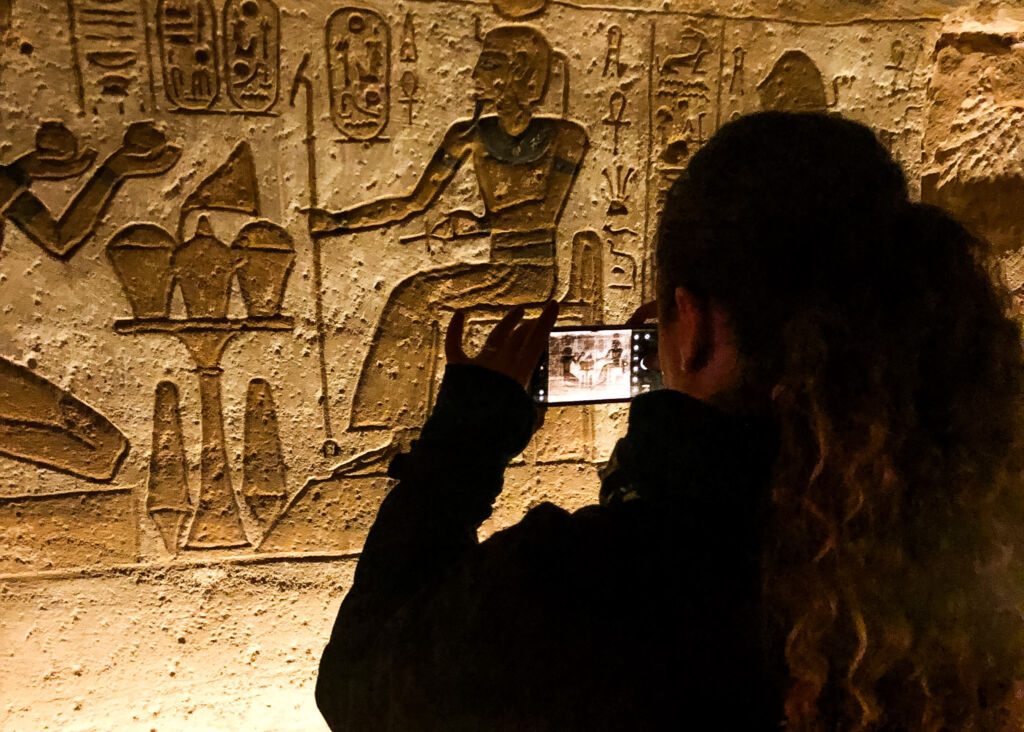
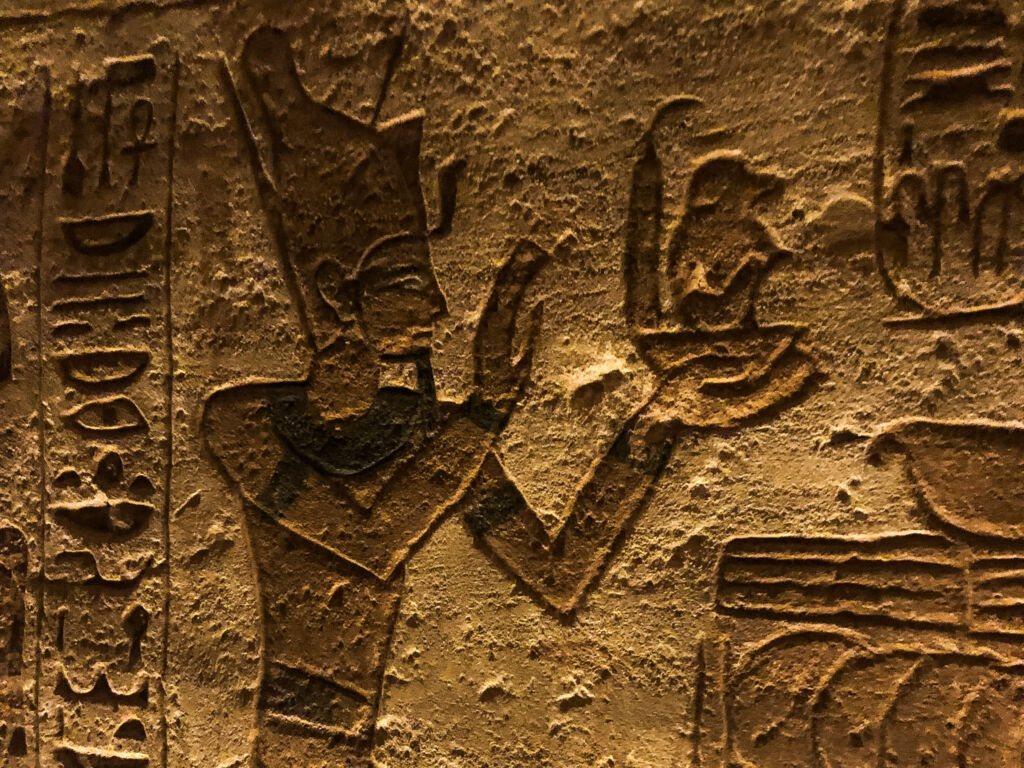
Crowd Chaos at the Abu Simbel Sun Festival
And just like that, “the line” ceased to exist.
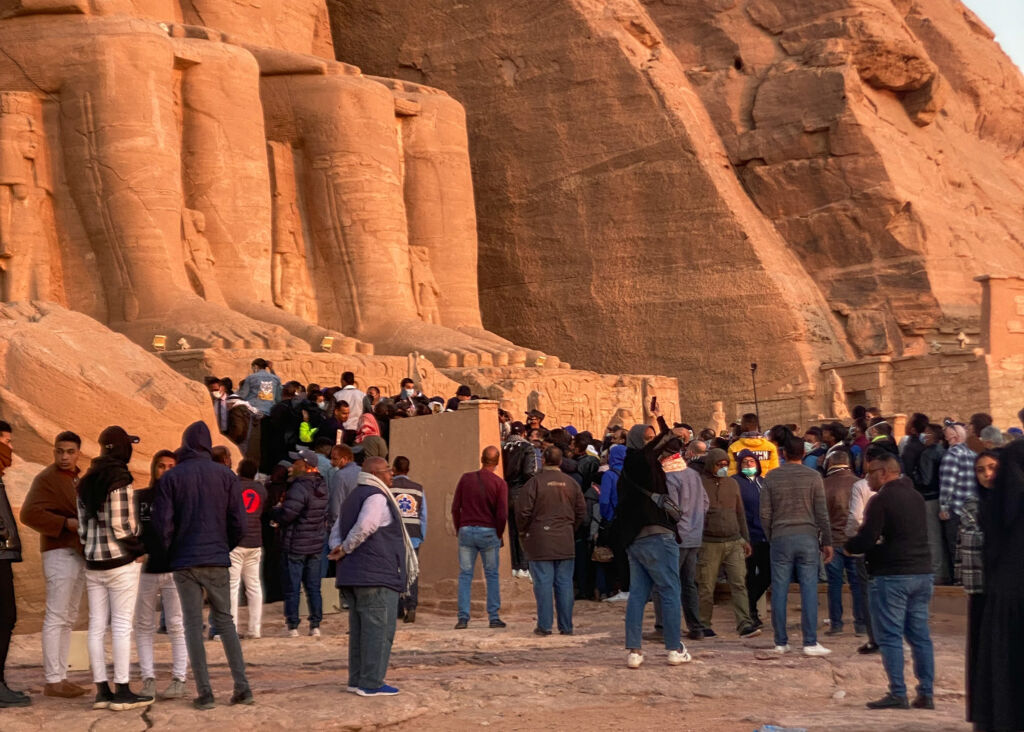
Whatever flimsy organization had been hanging on instantly collapsed, replaced by pure survival-mode crowd behaviour. When the temple doors opened, thousands of people surged forward. This was probably the closest I’ve ever been to the center of an actual mob. Elbows out, barriers ignored, personal space long forgotten.
People climbed over the few barricades that existed, slipped through gaps, and shoved past anyone who hesitated for more than half a second. The new unspoken rule was simple: if you can push your way in, you deserve to be there.
We tried to shuffle forward with everyone else, but every time we gained a meter, twenty more people materialized from the sides and cut ahead. It felt relentlessly rude and selfish — as if everyone who hadn’t waited two hours in line decided their time was somehow more valuable than ours.
Meanwhile, the clock was ticking.
The illumination only lasts around 25 minutes, and the line wasn’t moving. At all. People entering weren’t exiting, and there was no flow. Just a human bottleneck at the most crucial moment.
As we watched the sun climb higher, the anxiety set in hard. Should we have pushed our way in too? Jumped the barricades? Performed a tactical crowd infiltration?
At this rate, it didn’t look like we’d make it inside before the light disappeared from the sanctuary.
Honestly, someone should’ve seated a group inside the temple before sunrise to help move thousands of people through faster. But no, this was the Abu Simbel Sun Festival. Organization had already left the building.
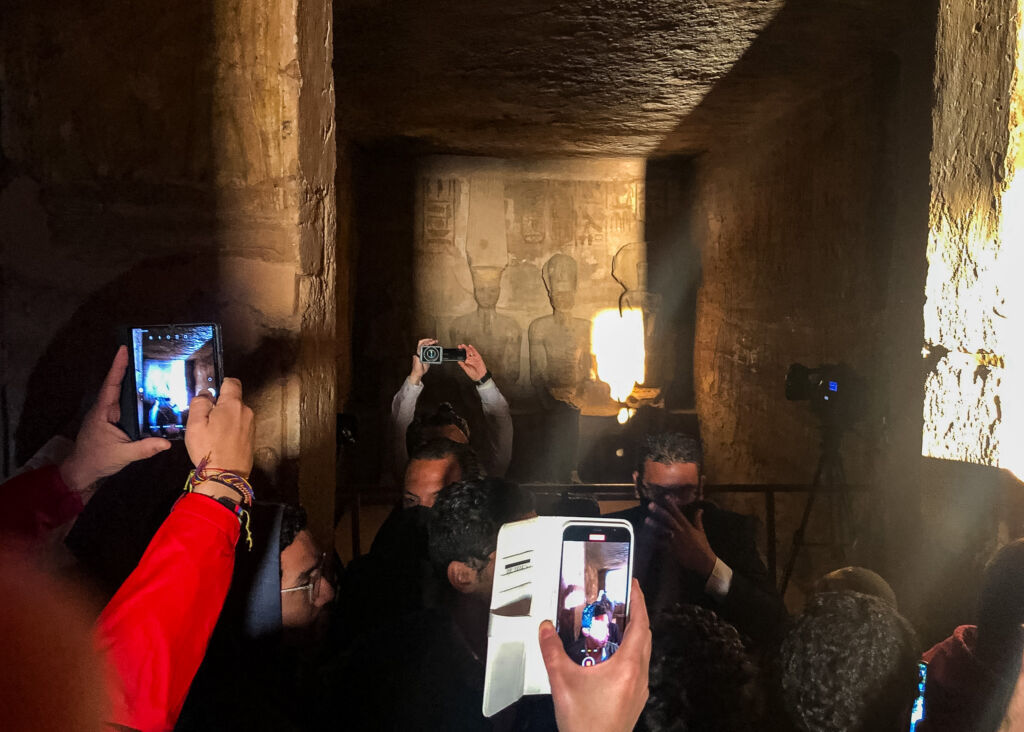
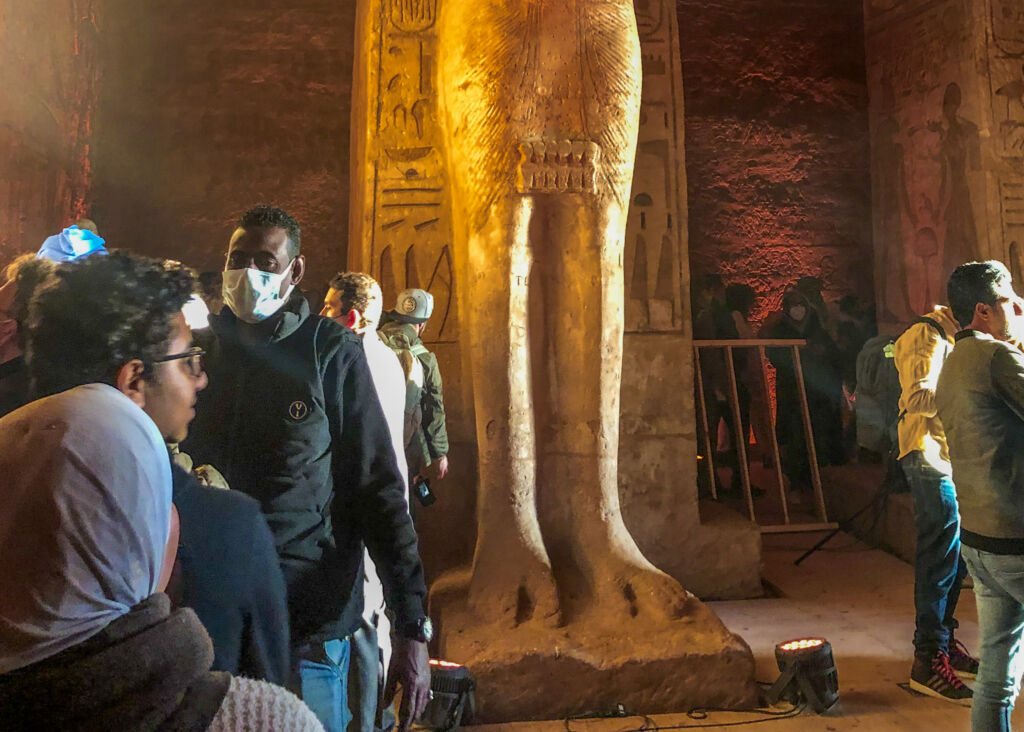
We Made It Inside
We finally got in, but it was very close to the 25-minute mark since the doors had opened. Meaning the sun had almost completely passed by the statues and we still had to go through the temple before we got to the back chamber. Hands were up as rows and rows of people continued pushing as if it was a sport. We definitely felt like cattle being herded through an ancient temple. Now wasn’t the time to take pictures of other spots inside the temple, but you couldn’t help being in awe as you entered.
But we were on a mission and more than 1/2 of the people in line seemed to have forgotten that. So we shuffled along the best we could and tried to shimmy around anyone still focused on getting photos or video near the entrance.
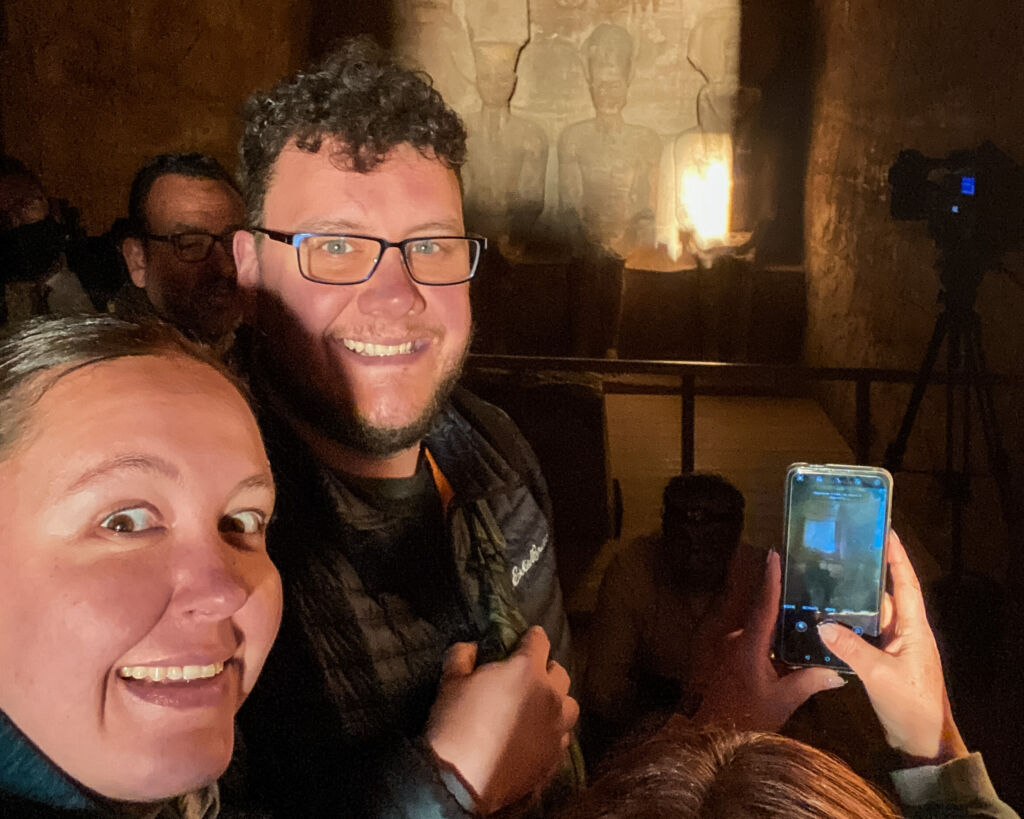
By the time we had made it to the final chamber, the mob had intensified. There were people and arms going everywhere. How can I best describe this situation? I would say that more phones saw the illuminated statue than people did because if you were blocked by someone, you tried to at least capture it with your phone. Because let’s be real, at least your phone sees it if you can’t. But I remember just shouting for Johnathan to see if he was anywhere near me. The situation was getting overwhelming and it was super unpredictable. We were getting close to the end of the illumination, so we didn’t know what to expect from a crowd that was already climbing over anything possible to get a few people ahead. It felt dangerous and Johnathan suggested that we grab our pictures and video quickly and get to a safer area.
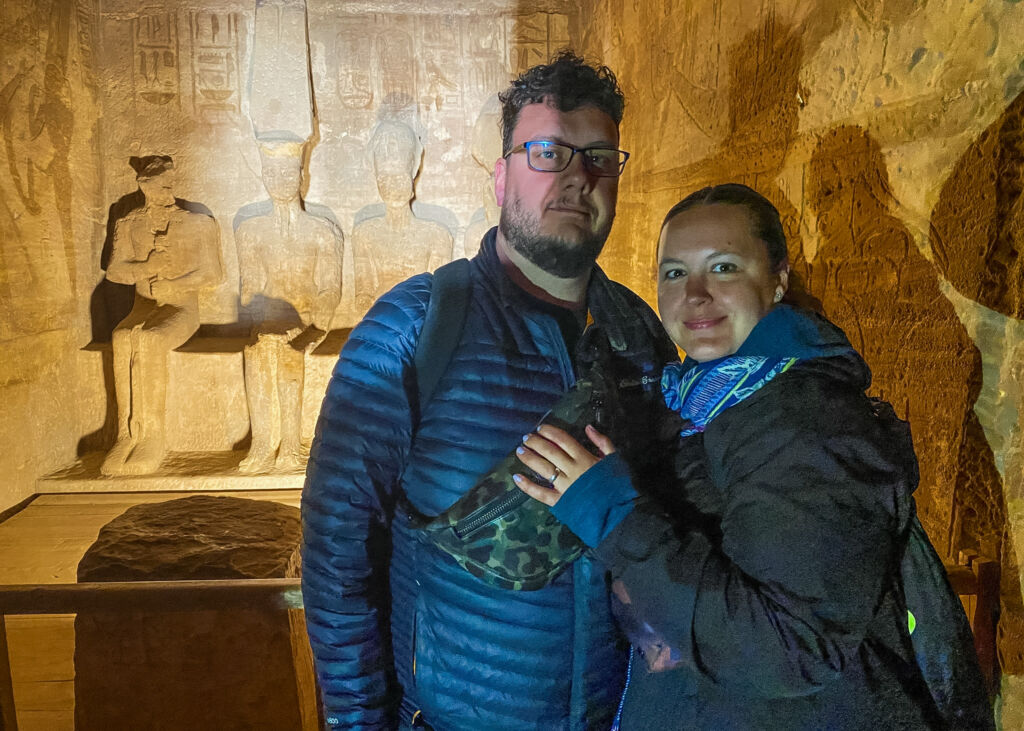
But the question of the hour is what was illuminated once we got to the innermost chamber? Only the shoulder of Amun, the king of gods. Which means we were a few minutes away from missing the event entirely. I blame this on the lack of planning and organization for such a large group and important event.
Our Takeaway: Is the Abu Simbel Sun Festival Worth It?
The whole experience felt rushed and anything but magical. And honestly, it could have been magical. The potential is absolutely there. But when you try to move 4,000 people through a narrow ancient temple in a 25-minute window, chaos isn’t a possibility, it is a guarantee.
The sanctuary was never designed to handle modern crowd dynamics or modern levels of entitlement. And with no crowd control in place, things went downhill fast. We watched people climb on parts of the temple just to inch ahead. This is the kind of behaviour that gets you arrested in other countries. It is also exactly the sort of thing that leads to famous sites being restricted or shut down altogether to prevent further damage.
It also made us wonder if this event is really being run with preservation in mind. The temple can handle high visitation, but not thousands of people funneled in at the same moment with no oversight.
Here is the truth:
Abu Simbel is incredible. On a normal day, it is one of the absolute highlights of Egypt.
But the Sun Festival is not worth planning your trip around.
Between the overselling, the lack of organization, the long lines, and the chaotic rush through the temple, the experience ends up more stressful than spectacular. Go see Abu Simbel, just not like this.
Our Advice
Visit Abu Simbel on a regular day. You will enjoy the temples far more, take better photos, and actually appreciate the history without the crowds and confusion. Do not let the hype of the twice-a-year sunrise ruin what could be a peaceful and memorable experience.
If you still want to see the temple illuminated, you can. Go one or two days before or after the Sun Festival. You will still see most of the statues lit by the sun. Usually not all three at once, but unless you are among the first fifty people in line on February 22 or October 22, you will not see all three illuminated anyway. We only saw part of a shoulder. At the current rate of overcrowding, the next festival will likely have even more than 4,000 attendees, and I am sure many people behind us never saw anything at all. You do not want that to be you.
So unless you are the type to push and claw your way through a crowd, skip visiting Abu Simbel during the Sun Festival.
There is one logistical catch. Many tours from Aswan do not arrive early enough to catch the sunrise on a normal day. It is a 3.5 to 4 hour drive each way. If a sunrise visit is important to you, the best option is to spend the night in Abu Simbel town and walk to the temple early in the morning.
If you want to see what a calm sunrise visit looks like, check out the article by Alissa from Exploring Wild. She visited on February 24, two days after the festival, still saw part of the illumination, and had a much better experience.
We aim to show travel honestly, not just the over-hyped moments. The world is full of wonders, but some of them are best enjoyed on your own terms. We recommend heading to the white desert overnight for a true adventure. You can see more about or trip here. We still talk about this experience and its positive. Choose what is right for you and your time in Egypt.